

U.S. military anthems are more than just songs; they are powerful symbols of identity, tradition, and shared sacrifice for each branch of service. These anthems forge a deep sense of belonging and esprit de corps among service members, fostering the strong bonds that define military life as highlighted by the Association of the United States Army.
Each branch’s unique melody and lyrics encapsulate its distinct mission, values, and historical journey. Understanding the history and meaning behind these anthems offers a profound appreciation for the men and women who serve, and for the enduring traditions that shape the U.S. military.

How do military anthems build identity and preserve history?
Military anthems build identity and preserve history by serving as a chronological narrative of America’s evolving military power, reflecting expansion from land and sea dominance to air and space operations. The sequence of their creation reveals how each song captures the unique mission and values of its era, establishing a temporal lens that showcases how military culture uses music to establish identity and preserve institutional memory across generations.
These songs are critical psychological and operational instruments, not merely ceremonial pieces. For instance, a 2023 analysis of Army Music missions found that 54.26% were directed at perpetuating service identity and esprit de corps according to the AUSA. This strategic use of music reinforces values and strengthens the fighting spirit across all branches.
The U.S. Army: ‘The Army Goes Rolling Along’ (1956)
‘The Army Goes Rolling Along’ became the official anthem of the U.S. Army in 1956, evolving from a song originally composed for the Field Artillery. Its journey reflects the Army’s broad mission and enduring values.
- Original Title: The song originated as ‘The Caissons Go Rolling Along’ in 1908, written by 1st Lt. Edmund L. Gruber at Fort Stotsenburg, Philippines as documented by the Library of Congress.
- Evolution: John Philip Sousa adapted the melody in 1917, renaming it ‘The U.S. Field Artillery March,’ which served as an unofficial anthem during WWI per the Library of Congress.
- Official Adoption: After two failed national contests in 1948 and 1952, Harold W. Arberg wrote new lyrics to Gruber’s melody, leading to its official adoption on Veterans Day, November 11, 1956 as noted by military historical archives.
- Key Lyrics: The lyrics celebrate the Army’s global presence and readiness, embodying the spirit of continuous movement and unwavering commitment to freedom.
The anthem is performed at all official Army ceremonies, encapsulating the branch’s long-standing tradition of service and global reach.
The U.S. Navy: ‘Anchors Aweigh’ (1906)
‘Anchors Aweigh’ was composed in 1906 and has since become the iconic anthem of the U.S. Navy, symbolizing its maritime heritage and fighting spirit.
- Origins: Charles A. Zimmermann, then a Lieutenant and bandmaster at the U.S. Naval Academy, composed the melody in 1906 at the request of Midshipman Alfred Hart Miles according to Naval Academy Tourism.
- Football Rivalry: The song was initially created as a football march for the Class of 1907 to celebrate their victory over Army and was first performed publicly at the Navy vs. West Point game in Philadelphia as noted in historical accounts.
- Meaning: ‘Anchors aweigh’ is a nautical command signifying that the anchors have been cleared from the seabed, indicating a ship is ready to sail. The lyrics reflect Navy tradition, emphasizing readiness, global deployment, and unwavering courage.
- Maritime Heritage: The anthem proudly reflects the Navy’s deep connection to the sea and its role in defending national interests across the world’s oceans.
This anthem is a staple at Naval Academy events, ship commissionings, and countless other Navy ceremonies, solidifying its status as the musical signature of the U.S. Navy according to Naval Academy Tourism.
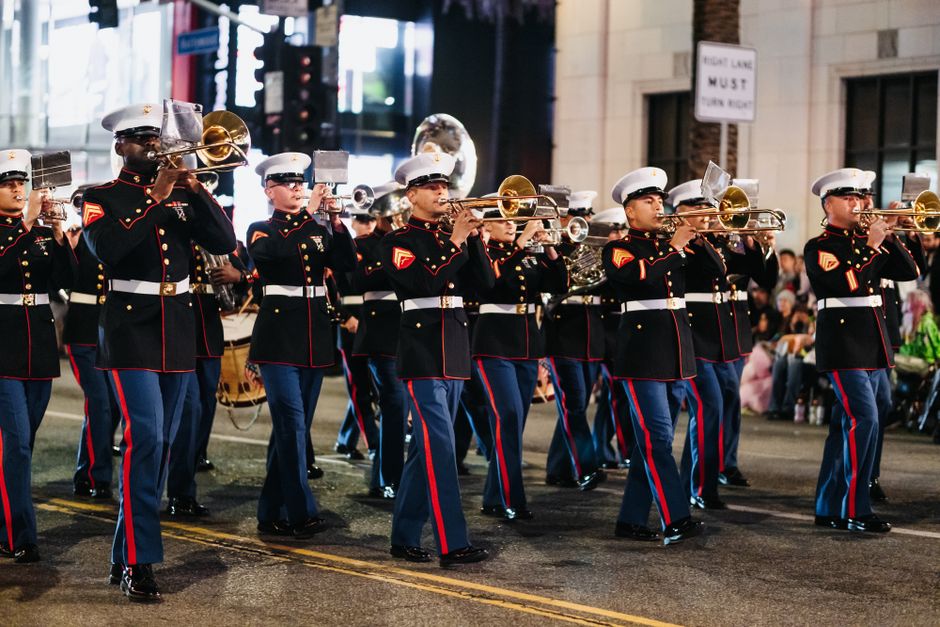
The U.S. Marine Corps: ‘The Marines’ Hymn’ (1867)
‘The Marines’ Hymn’ holds the distinction of being the oldest official military song in the U.S., its origins tracing back to the mid-19th century.
- Oldest Official Song: While not officially authorized until 1929, the lyrics date back to the 1840s, making it the oldest military service song as confirmed by the Marine Corps University.
- Historical References: The opening lines, “From the Halls of Montezuma to the Shores of Tripoli,” reference pivotal 19th-century battles. ‘Halls of Montezuma’ refers to the Battle of Chapultepec during the Mexican-American War in 1847, while ‘shores of Tripoli’ commemorates the 1805 Battle of Derna during the First Barbary War per the U.S. Naval Institute.
- Unknown Composer: The exact composer of the melody and original lyrics remains unknown, adding to its mystique and organic adoption by Marines.
- Recognizability: Its distinctive melody and historical lyrics make it arguably the most recognizable U.S. military anthem, deeply ingrained in American culture.
The hymn is a powerful testament to the Marine Corps’ storied history and unwavering commitment, played at all Marine Corps events and ceremonies. Explore Learn more.
The U.S. Air Force: ‘The U.S. Air Force Song’ (1939)
‘The U.S. Air Force Song,’ commonly known by its opening line “Off We Go into the Wild Blue Yonder,” was created before the Air Force became an independent branch, symbolizing its aspirations for air superiority.
- Creation by Robert Crawford: Robert MacArthur Crawford composed the song in 1939 after winning a contest launched by Liberty Magazine according to the U.S. Air Force Band.
- Original Title: It was originally titled ‘The Army Air Corps’ song, reflecting its status as part of the Army before the Air Force’s independence in 1947 as noted by Military Wives.
- Lyrics: The lyrics celebrate flight, sky dominance, and the daring spirit of aviators, emphasizing the power and reach of American airpower.
- Establishing Identity: The song played a crucial role in forging a distinct identity for the Air Force, separate from its Army roots, and became the official anthem in 1947 per the U.S. Air Force Band.
This anthem is performed at all Air Force ceremonies, celebrating the branch’s mastery of the skies.
The U.S. Coast Guard: ‘Semper Paratus’ (1927)
‘Semper Paratus’ is the stirring anthem of the U.S. Coast Guard, embodying its motto and critical mission of maritime safety and security.
- Composer: Captain Francis Saltus Van Boskerck wrote the music in 1927 while stationed in the Aleutian Islands, though the lyrics were penned earlier in 1922 as detailed by the Coast Guard Historian’s Office.

Photo by Hugo Martínez The U.S. Space Force: ‘Semper Supra’ (2022)
As America’s newest military branch, the U.S. Space Force unveiled its official anthem, ‘Semper Supra,’ in 2022, marking a new era of military music.
- Newest Anthem: ‘Semper Supra’ was publicly unveiled on September 20, 2022, at the Air Force Association Air, Space and Cyber Conference, making it the most recent addition to the family of U.S. military anthems as announced by Air Force News.
- Meaning: ‘Semper Supra’ is Latin for ‘Always Above,’ clearly defining the Space Force’s domain and mission in protecting U.S. interests in space.
- Modern Composition: The anthem was a collaborative effort, with lyrics and melody by James Teachenor and arrangement by Sean Nelson of the U.S. Coast Guard Band per Air Force News. The creation process took over three years, emphasizing the importance of accurately representing the branch’s capabilities and vision according to Space Force officials.
- Identity: This modern anthem helps establish the Space Force’s unique identity and culture, distinguishing it from other branches and highlighting its focus on space operations.
The song reflects the Space Force’s dedication to its pioneering role in the extraterrestrial domain.
The Oscar Mike Radio platform consistently features discussions with U.S. Veterans, including those from the newest branches, providing unique insights into how these anthems resonate with service members. Our podcast episodes often explore the cultural significance of military traditions and how they unite the veteran community.
The table below provides a quick reference guide to the U.S. military branch anthems, highlighting their key characteristics.
Branch Official Anthem Year Adopted Key Latin Phrase Notable Lyric Reference Primary Theme U.S. Army ‘The Army Goes Rolling Along’ 1956 N/A “First to fight for the right” Land dominance, global readiness U.S. Navy ‘Anchors Aweigh’ 1906 N/A “Anchors aweigh, my boys” Maritime heritage, naval power U.S. Marine Corps ‘The Marines’ Hymn’ 1929 N/A “From the Halls of Montezuma” Historical valor, expeditionary force U.S. Air Force ‘The U.S. Air Force Song’ 1947 N/A “Off We Go into the Wild Blue Yonder” Air superiority, flight U.S. Coast Guard ‘Semper Paratus’ 1927 Semper Paratus (Always Ready) “We’re always ready for the call” Maritime safety, rescue, readiness U.S. Space Force ‘Semper Supra’ 2022 Semper Supra (Always Above) “We’re the mighty watchful eye” Space domain, orbital operations Photo by A.J. Groomes Why Military Anthems Matter to Veterans and Service Members
Military anthems hold profound emotional significance for U.S. Veterans and active-duty service members, acting as powerful reminders of their service, sacrifice, and the enduring bonds of camaraderie. These songs are more than mere melodies; they are psychological anchors that connect individuals to their unit’s history and values as discussed by military cultural studies. Explore Learn more.
Research indicates that music, particularly branch anthems, can evoke strong emotions such as pride, nostalgia, and a sense of unity according to studies on veterans’ emotional responses. This emotional connection is stable across different age groups of Veterans, highlighting the anthems’ lasting impact per a study on veterans’ musical preferences. These anthems are frequently used in military ceremonies, reunions, and memorial events, serving as a shared cultural touchstone that transcends generations and reinforces institutional memory.
Key Takeaways
- Each U.S. military branch possesses a unique anthem reflecting its mission, history, and values.
- The anthems were adopted over a period spanning from 1929 (‘The Marines’ Hymn’) to 2022 (‘Semper Supra’).
- Lyrics often contain direct historical references, such as the ‘Halls of Montezuma’ and ‘Shores of Tripoli’ in ‘The Marines’ Hymn.’
- Latin phrases like ‘Semper Paratus’ (Coast Guard) and ‘Semper Supra’ (Space Force) embody core mottos.
- Anthems are vital for building esprit de corps, fostering identity, and preserving military traditions.
- Veterans maintain a deep emotional connection to their branch’s anthem, often using it for emotional regulation and remembrance.
Conclusion
The anthems of the U.S. military branches are invaluable cultural artifacts that encapsulate the spirit, history, and enduring missions of the Army, Navy, Marine Corps, Air Force, Coast Guard, and Space Force. From the battlefields of the 19th century to the frontiers of space, each song provides a unique auditory snapshot of its respective service’s journey and identity.
These powerful melodies and lyrics do more than commemorate; they actively shape the morale and cohesion of service members and Veterans alike. As these traditions continue, Oscar Mike Radio remains dedicated to honoring the stories and voices of U.S. Veterans, recognizing the profound significance of these anthems in their lives.
Frequently Asked Questions
What is the oldest U.S. military anthem?
The Marines’ Hymn, with lyrics dating back to the 1840s and officially adopted in 1929, is the oldest official military song in the U.S., predating other branch anthems by decades as confirmed by Marine Corps University. Explore Learn more.
Why does the Marines’ Hymn mention the Halls of Montezuma?
The mention of the ‘Halls of Montezuma’ refers to the Battle of Chapultepec in 1847 during the Mexican-American War, where Marines played a crucial role in capturing Chapultepec Castle per the U.S. Naval Institute.
What does Semper Paratus mean in the Coast Guard anthem?
‘Semper Paratus’ is Latin for ‘Always Ready,’ reflecting the U.S. Coast Guard’s core mission of constant preparedness for search and rescue, maritime law enforcement, and national security duties as detailed by the Coast Guard Historian’s Office.
When did the Space Force get its own anthem?
The U.S. Space Force officially unveiled its anthem, ‘Semper Supra,’ on September 20, 2022, making it the newest military anthem according to Air Force News.
Which military anthem is the most recognizable to civilians?
The Marines’ Hymn is widely considered the most recognizable U.S. military anthem to civilians due to its distinctive melody, historical lyrics, and pervasive cultural presence. Explore Learn more.
What was the Air Force anthem originally called?
The Air Force anthem was originally titled ‘The Army Air Corps’ song when it was composed in 1939 by Robert Crawford as noted by the U.S. Air Force Band, before the Air Force became an independent branch in 1947.
Do military anthems have to be played at certain ceremonies?
Yes, military anthems are played during official military events, retirements, and commemorations, following strict protocols for respect and honor as outlined in ceremonial music guides.
Who wrote Anchors Aweigh for the Navy?
Charles A. Zimmermann, then a Lieutenant and bandmaster at the U.S. Naval Academy, composed ‘Anchors Aweigh’ in 1906 as a football march for the Class of 1907 as noted by Naval Academy Tourism.
What does Semper Supra mean for the Space Force?
‘Semper Supra’ is Latin for ‘Always Above,’ representing the U.S. Space Force’s mission and domain in ensuring U.S. advantage and security in the space environment per Air Force News. Explore Learn more.
Why do Veterans feel emotional when hearing their branch’s anthem?
Veterans feel emotional when hearing their branch’s anthem because these songs serve as powerful psychological anchors, triggering memories of shared experiences, camaraderie, sacrifice, and their identity as service members according to studies on military music.
Key Terms Glossary
Esprit de Corps: A feeling of pride, fellowship, and common loyalty shared by the members of a particular group.
Anthem: A song or hymn of praise or devotion, often for a nation, state, or particular group.
Caudal: A nautical term referring to the stern or tail end of a ship. Explore Learn more.
Montezuma: Refers to the Battle of Chapultepec, an important engagement during the Mexican-American War in 1847.
Tripoli: Refers to the Battle of Derna in 1805, a decisive victory for U.S. forces during the First Barbary War.
Caisson: A two-wheeled cart designed to carry artillery ammunition, historically pulled by horses.
Semper Paratus: The Latin motto of the U.S. Coast Guard, meaning “Always Ready.”
Semper Supra: The Latin motto of the U.S. Space Force, meaning “Always Above.”