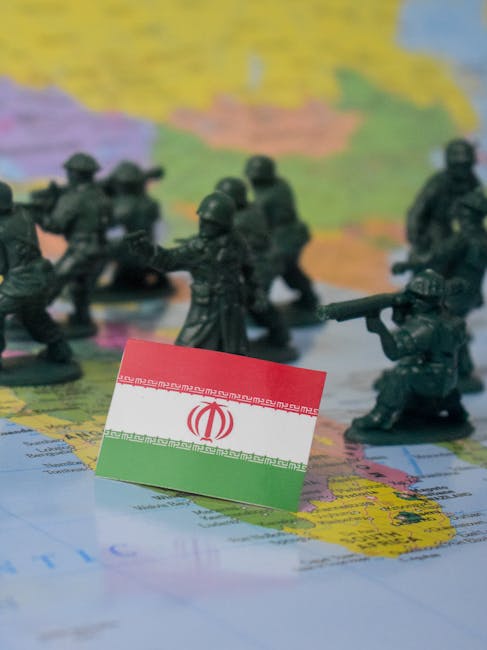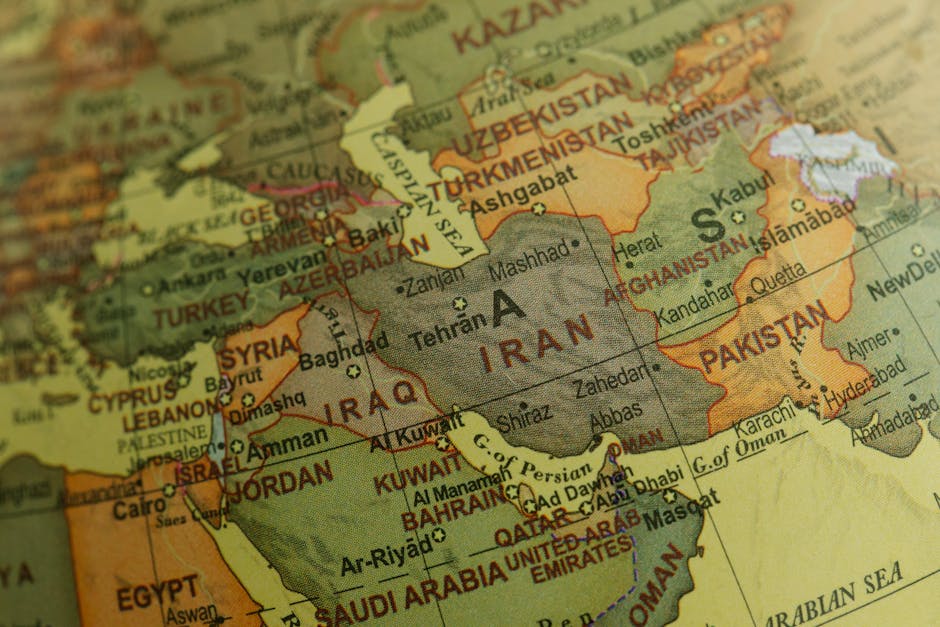


As of August 2026, tensions between the United States and Iran remain critically high, marked by escalating military postures and a fragile, intermittent ceasefire. Understanding the strategic objectives of both nations, the complexities of diplomatic efforts, and the realistic projections for this conflict is crucial for U.S. Military Veterans, active-duty service members, and concerned Americans.
This article provides an in-depth analysis of the U.S.-Iran conflict, examining the strategic goals and capabilities of each side, the status of ceasefire negotiations, and potential future scenarios. We will employ a veteran-developed analytical model, the Three-Theater Analysis Framework, which views the conflict through conventional military, proxy warfare, and diplomatic/economic lenses, highlighting their interconnectedness.

How Did the U.S. and Iran Reach This Point of Conflict?
The current U.S.-Iran conflict stems from a series of escalating flashpoints between 2020 and 2026, building upon decades of mistrust. Key incidents, such as the aftermath of the Soleimani strike, persistent proxy engagements, and advancements in Iran’s nuclear program, have fueled a cycle of confrontation.
Regional allies and adversaries have played significant roles in shaping these dynamics, often drawing the U.S. deeper into the conflict. Previous attempts at ceasefire have faltered due to deep-seated trust deficits and conflicting preconditions.
Lessons from the Iraq and Afghanistan wars, particularly regarding asymmetric warfare and the challenges of nation-building, continue to inform current U.S. strategy, emphasizing limited engagement over large-scale ground operations.
- 2020-2026 Flashpoints: Escalating tensions included the aftermath of the Soleimani strike, numerous proxy conflicts across the Middle East, and significant developments in Iran’s nuclear program, pushing both nations closer to direct confrontation.
- Regional Influence: The involvement of regional allies and adversaries, including Saudi Arabia, the UAE, and Israel, has consistently complicated diplomatic efforts and military calculations, often widening the scope of the conflict.
- Failed Ceasefires: Prior diplomatic attempts struggled due to a lack of mutual trust, non-negotiable preconditions from both sides, and internal political pressures, preventing sustainable de-escalation.
- Lessons from Past Conflicts: U.S. strategists have internalized the high costs and complexities of protracted ground wars in Iraq and Afghanistan, influencing a preference for precision strikes and containment strategies in the current Iran posture.
What Are the U.S. Strategic Goals in This Conflict?
The United States’ strategic goals in the conflict with Iran are multifaceted, primarily aimed at containing Iranian influence, deterring aggression, and pressuring the regime to alter its behavior. These objectives balance military action with the pursuit of diplomatic resolutions. Explore Learn more.
Official statements in 2026 consistently emphasize degrading Iran’s military capabilities, denying it nuclear weapons, and protecting regional partners. President Trump’s administration outlined clear objectives: destroying Iran’s missile capabilities, annihilating its navy, and preventing nuclear weapon acquisition per White House releases.
- Containment and Deterrence: The U.S. seeks to limit Iran’s regional expansion and deter aggressive actions through a forward military presence and robust defense capabilities.
- Preventing Nuclear Proliferation: A primary objective is to ensure Iran never develops nuclear weapons, targeting its nuclear program and associated infrastructure externalproducts/R/PDF/R45281/R45281.6.pdf”>according to CRS analysis.
What Are Iran’s Strategic Goals and Capabilities?
Iran’s strategic goals are centered on regime survival, asserting regional hegemony, and securing sanctions relief, all underpinned by a military doctrine focused on asymmetric warfare and the leveraging of proxy networks. The Islamic Revolutionary Guard Corps (IRGC) is central to executing this strategy, controlling critical military assets and projecting power.
Iran maintains the largest ballistic missile force in the Middle East, with an operational range of approximately 2,000 km, capable of reaching Israel and most U.S. bases in the region as reported by Reuters. Its military capabilities include advanced missile systems, naval forces optimized for the Strait of Hormuz, and sophisticated cyber operations.
The IRGC, with an estimated 190,000 active personnel, operates as a parallel military-security apparatus, encompassing ground, naval, and aerospace forces, along with the elite Quds Force for external operations according to the Council on Foreign Relations. Their proxy networks, though fragmented, remain a significant force, capable of conducting more than 170 attacks on U.S. military bases and assets in Iraq, Syria, and Jordan between October 2023 and February 2024 as highlighted by Foreign Policy. Explore Learn more.
The Three-Theater Analysis Framework reveals how Iran’s strategic use of proxy forces in the proxy warfare theater directly impacts the diplomatic and conventional military theaters. For example, proxy attacks can be used to signal resolve during negotiations or to complicate U.S. military planning, creating a complex web of interconnected challenges.
| Capability Category | United States | Iran | Strategic Implication |
|---|---|---|---|
| Conventional Military Forces | Advanced, high-tech, expeditionary, global reach, approximately 50,000 troops in CENTCOM in 2026 per the New York Times. | Large, regionally focused, asymmetric doctrine, estimated 500,000 personnel including 150,000 IRGC cadres according to FAF analysis. | U.S. aims for precision and overwhelming force; Iran prioritizes defense-in-depth and attrition. |
| Naval Power Projection | Global blue-water navy, multiple carrier strike groups (2 carriers in region in Feb 2026 CSIS reported), advanced destroyers. | Asymmetric naval doctrine, fast-attack craft, mines, coastal missiles, focus on Strait of Hormuz. | U.S. seeks to maintain freedom of navigation; Iran aims to deny access and impose costs. |
| Missile and Drone Arsenal | Precision-guided munitions, air-launched cruise missiles, advanced air defense. | Estimated 2,000 ballistic missiles with up to 2,000 km range, improving accuracy, significant drone capabilities FAF analysis. | Iran’s primary conventional deterrent and regional strike capability; U.S. seeks to degrade this arsenal. |
| Cyber Warfare Capabilities | Highly advanced offensive and defensive capabilities, sophisticated intelligence gathering. | Developing capabilities, demonstrated ability to conduct disruptive attacks, focus on critical infrastructure. | Asymmetric threat for Iran to disrupt U.S. and allied systems; U.S. maintains cyber dominance. |
| Regional Proxy Networks | Limited direct proxy support, reliance on direct military action and alliances. | Extensive network (Hezbollah, Houthi, Iraqi militias) providing asymmetric leverage, though increasingly fragmented per Belfer Center. | Iran uses proxies to project influence and avoid direct confrontation; U.S. aims to disrupt these networks. |
| Nuclear Capabilities | Established nuclear arsenal, non-proliferation advocate. | Uranium enrichment program, capacity for weaponization (denied by Iran), subject to international scrutiny. | Nuclear non-proliferation is a core U.S. objective; Iran seeks to maintain a nuclear program, potentially for leverage. |
What Are the Current Ceasefire Efforts and Diplomatic Channels?
Ceasefire efforts between the U.S. and Iran in 2026 have been ongoing but remain fragile, with diplomatic channels intermittently active despite recurrent hostilities. International actors, including the UN, EU, and regional powers, have made active mediation attempts.
A preliminary framework, or Memorandum of Understanding, was reportedly reached to extend the ceasefire and open a 60-day negotiation window according to AP News. This framework reportedly included a roadmap for a final deal, with discussions centered on reopening the Strait of Hormuz as reported by CNBC.
However, significant obstacles persist, primarily deep trust deficits, conflicting preconditions, and the influence of domestic politics on both sides. While Pakistan’s Prime Minister Shehbaz Sharif claimed a “final, agreed upon text” had been settled per AP News, subsequent reports indicated talks ended without full resolution, with both sides accusing each other of violations AP News also reported. Back-channel communications and Track II diplomacy continue to play a role in maintaining some semblance of dialogue.
- Initial Ceasefire: An initial two-week truce was announced in early April 2026 after approximately 40 days of assaults, aiming to de-escalate immediate hostilities

Photo by Saifee Art How Does This Conflict Impact U.S. Military Personnel and Veterans?
The ongoing U.S.-Iran conflict places a significant burden on U.S. military personnel and Veterans, particularly those with prior Middle East deployments. Deployment levels in CENTCOM have been elevated, with approximately 50,000 U.S. troops stationed in the Middle East in March 2026, a number that rose to over 50,000 with additional Marine and sailor deployments according to the New York Times. Explore Learn more.
This sustained operational tempo can lead to increased stress and potential mental health challenges for active-duty service members. For Veterans, news of renewed conflict in the region can trigger memories and anxieties related to their past service, particularly for those who served in Iraq and Afghanistan.
Mental health considerations are paramount. Combat exposure, not merely deployment, is a key driver of adverse mental health outcomes, with roughly 14% to 16% of OEF/OIF deployed Veterans affected by PTSD or depression per a review in the Journal of Military and Veterans’ Health. Resources through the VA and Veteran service organizations are critical for support.
- Elevated Deployments: Current deployment levels in CENTCOM remain high, with tens of thousands of U.S. service members in the region, leading to increased operational tempo and potential burnout.
- Veteran Impact: News and developments in the Middle East can act as triggers for U.S. Veterans, particularly those with service in Iraq or Afghanistan, potentially leading to re-deployment anxiety and exacerbated PTSD symptoms.
- Mental Health Considerations: The long-term mental health effects of combat exposure, including PTSD, depression, and substance use, are significant concerns for both active-duty personnel and Veterans.
- Available Resources: The VA and various Veteran service organizations offer crucial mental health support, counseling, and peer networks to help manage these challenges. Oscar Mike Radio also serves as a platform for open discussion and resource sharing, connecting Veterans to vital support.
What Are the Future Projections: Three Possible Scenarios?
The future trajectory of the U.S.-Iran conflict remains uncertain, with expert military analysis in 2026 outlining three primary scenarios. These projections are heavily influenced by diplomatic breakthroughs, economic pressures, and the ever-present risk of miscalculation.
War-gaming simulations and analyses, such as those published by FAF, consistently point to a high-intensity, limited campaign focused on air, missile, cyber, and maritime operations, rather than a full-scale ground invasion per FAF. A U.S. ground invasion is considered “viable” only in the first 14 days in specific coastal areas, becoming “unmanageable” by day 30 according to a 2026 war-gaming paper. Explore Learn more.
The Three-Theater Analysis Framework suggests that outcomes in one theater directly influence the others. For example, a negotiated de-escalation (diplomatic theater) could be undermined by continued proxy actions (proxy warfare theater), leading to renewed military pressure (conventional military theater).
Photo by Lara Jameson Best Case: Negotiated De-escalation and Limited Ceasefire Agreement
This scenario involves a successful diplomatic breakthrough, leading to a more robust ceasefire. Key factors would include both sides making significant concessions on nuclear development, regional influence, and sanctions relief. The Strait of Hormuz would likely reopen fully, and proxy activity would significantly decrease. This path would require sustained international mediation and a willingness from both Washington and Tehran to prioritize stability over maximalist demands.
Most Likely: Prolonged Low-Intensity Conflict with Periodic Escalations
Current analysis suggests this is the most probable outcome. The conflict would persist as a series of limited military engagements, cyber attacks, and proxy skirmishes, punctuated by periodic, short-lived escalations. Oil prices would remain volatile per Dallas Fed estimates, and diplomatic efforts would continue to be fragile, with no comprehensive peace agreement reached. This scenario reflects the ongoing trust deficit and the difficulty of achieving a full resolution without fundamental shifts in strategic objectives from either side.
Worst Case: Regional War Involving Multiple State Actors
This dire scenario would see the conflict broaden significantly, potentially drawing in regional powers like Saudi Arabia, the UAE, and Israel, as well as global actors. A major miscalculation, such as a direct attack on critical infrastructure or a significant escalation by proxy forces, could trigger this outcome. This would involve widespread military action, severe disruptions to global oil supplies, and immense human cost. The economic impact would be devastating, with oil prices potentially soaring beyond $120-$167 per barrel according to the Dallas Fed.
Photo by Tawseef Ahmad Key Takeaways
- The U.S.-Iran conflict in 2026 is characterized by escalating tensions, a fragile ceasefire, and interconnected strategic objectives across military, proxy, and diplomatic theaters.
- U.S. strategic goals focus on containing Iran, deterring aggression, preventing nuclear weapons, and protecting regional allies, while Iran seeks regime survival and regional hegemony through asymmetric warfare.
- Ceasefire efforts are ongoing but face significant obstacles due to deep trust deficits and conflicting national interests, leading to a prolonged low-intensity conflict as the most likely scenario.
- The conflict significantly impacts U.S. military personnel and Veterans, with elevated deployment levels and mental health considerations, underscoring the importance of support resources.
- Future projections range from negotiated de-escalation to full regional war, with the most probable outcome being continued low-intensity conflict with periodic escalations.
Conclusion: What Veterans Need to Know
Understanding the U.S.-Iran conflict requires a nuanced perspective, recognizing the interplay of strategic goals, military capabilities, and diplomatic challenges. For U.S. Veterans, this analysis provides context beyond daily headlines, offering insights into why this conflict persists and what its future might hold. Explore Learn more.
Reliable, unbiased information is crucial in navigating complex geopolitical situations. Oscar Mike Radio remains committed to providing honest, military-informed analysis, helping our community stay informed and prepared. We encourage Veterans to seek out trusted sources and to support one another, especially those affected by Middle East deployments.
Whether you’re an Army Veteran, a Navy Veteran, from the U.S. Marine Corps, or the U.S. Air Force, staying informed and connected is vital. We’re all in this together, Oscar Mike.
Frequently Asked Questions
What are the main reasons the U.S. and Iran are in conflict in 2026?
The main reasons for the U.S.-Iran conflict in 2026 include persistent concerns over Iran’s nuclear program, its extensive network of proxy forces in the Middle East, threats to U.S. regional allies, and historical grievances dating back decades. These factors create a complex web of strategic competition and confrontation. Explore Learn more.
Is the U.S. officially at war with Iran right now?
The U.S. is not officially at war with Iran in 2026 in the traditional sense, but the situation is best described as an undeclared conflict involving limited military engagements, cyber operations, and proxy warfare. A fragile ceasefire is intermittently in place, but hostilities continue below the threshold of full-scale declared war.
What does Iran want from the United States?
Iran primarily seeks comprehensive sanctions relief, international recognition of its regional influence, security guarantees against external aggression, and acceptance of its nuclear program for peaceful purposes. These objectives are central to its foreign policy and domestic stability.
How likely is a full-scale war between the U.S. and Iran?
While the risk of escalation is high, a full-scale ground war between the U.S. and Iran is considered less likely than a prolonged low-intensity conflict, according to 2026 expert analyses. Deterrence factors, the high costs of invasion, and the potential for regional destabilization make both sides cautious of an all-out conventional conflict. Explore Learn more.
What countries are involved in U.S.-Iran ceasefire negotiations?
International actors like the United Nations, the European Union, and regional powers such as Pakistan have been involved in mediating U.S.-Iran ceasefire negotiations. Their efforts aim to bridge the significant trust deficits and conflicting preconditions that have hampered diplomatic breakthroughs as of 2026.
How would a U.S.-Iran war affect oil prices and the global economy?
A U.S.-Iran war would severely impact oil prices and the global economy, primarily due to the Strait of Hormuz’s vulnerability, which carries about 20% of global oil and LNG supplies. Disruptions could cause Brent crude to spike to $100-$167 per barrel, leading to significant global inflation, as estimated by the Dallas Fed for 2026.
What military units are currently deployed in response to Iran threats?
As of 2026, the U.S. has approximately 50,000 troops stationed in the Middle East, including Marine and Navy personnel, alongside significant air and naval assets. These deployments include carrier strike groups, guided-missile destroyers, fighter aircraft, and Patriot missile batteries, as reported by the New York Times and Atlantic Council. Explore Learn more.
How does the U.S.-Iran situation compare to the Iraq and Afghanistan wars?
The U.S.-Iran situation differs significantly from the Iraq and Afghanistan wars, primarily emphasizing asymmetric warfare, proxy conflicts, and limited military actions over large-scale ground invasions. Lessons learned about nation-building and protracted occupations have shaped a strategy focused on containment and precision strikes rather than regime change through conventional ground forces.
What should Veterans do if they’re struggling with news about Middle East conflicts?
Veterans struggling with news about Middle East conflicts should immediately contact the Veterans Crisis Line by calling 988 and pressing 1, texting 838255, or chatting online, as these services are available 24/7 and are confidential. The VA and Veteran service organizations also offer mental health support and peer networks to help process these triggers.
Where can I find reliable updates on the U.S.-Iran situation?
For reliable updates on the U.S.-Iran situation, consult official government sources, reputable news organizations with dedicated Middle East reporting, and think tanks specializing in regional security. Oscar Mike Radio also provides expert military analysis to help cut through misinformation and offer informed perspectives.
Key Terms Glossary
Three-Theater Analysis Framework: A veteran-developed analytical model examining the U.S.-Iran conflict through conventional military, proxy warfare, and diplomatic/economic lenses, highlighting their interconnectedness.
Islamic Revolutionary Guard Corps (IRGC): Iran’s parallel military-security apparatus responsible for regime survival, strategic deterrence, and managing proxy forces.
Asymmetric Warfare: A military strategy used by a weaker combatant against a stronger one, relying on unconventional tactics, surprise, and leveraging local advantages.
Proxy Forces: Non-state armed groups supported and influenced by Iran to project power and achieve strategic objectives in regional conflicts without direct state involvement.
Strait of Hormuz: A critical narrow sea passage between the Persian Gulf and the Arabian Sea, vital for global oil and liquefied natural gas (LNG) shipments.
Ceasefire: A temporary suspension of fighting, typically agreed upon by opposing sides in a conflict, to allow for negotiations or de-escalation.
Operational Tempo: The rate at which military forces conduct operations, which can impact personnel readiness, equipment maintenance, and mental health.
PTSD (Post-Traumatic Stress Disorder): A mental health condition triggered by experiencing or witnessing a terrifying event, common among combat Veterans.