

Dr. Caroline Wilkerson Explores Photo biomodulation, Vielight, and Veteran Brain Health
What if light could play a role in supporting brain health and recovery?
It’s a question researchers are exploring through a technology known as photo biomodulation (PBM), which uses specific wavelengths of red and near-infrared light.
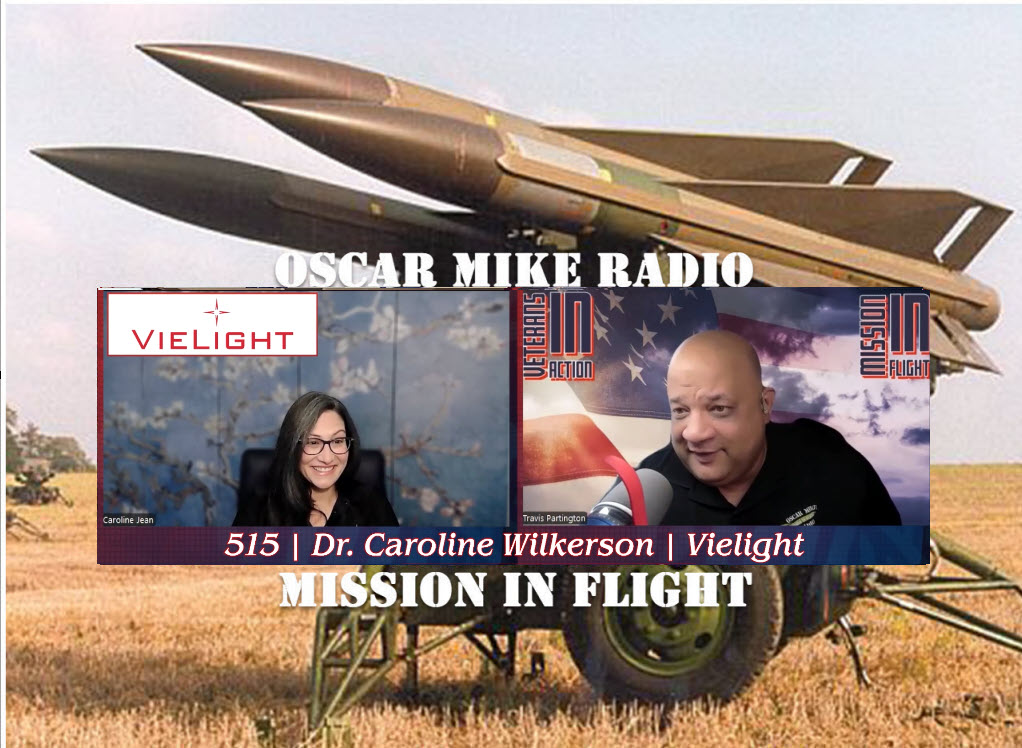
In Episode 515 of Oscar Mike Radio, I spoke with Dr. Caroline Wilkerson, a U.S. Navy veteran and acupuncture doctor, about her experiences with photobiomodulation, her interest in Vielight technology, and the growing research surrounding light-based therapies.
We discussed potential applications for sleep, brain fog, migraines, and traumatic brain injury (TBI), particularly among veterans.
What made this conversation interesting was Dr. Wilkerson’s willingness to discuss both the technology’s potential and the questions researchers are still working to answer.
From Navy Veteran to Acupuncture and Light Therapy
Dr. Wilkerson’s journey into acupuncture and photobiomodulation reflects her interest in exploring different approaches to health and wellness.
During our conversation, she described how her experiences with acupuncture and light-based devices influenced her understanding of recovery and patient care.
One experience stood out.
Dr. Wilkerson shared the story of a patient who received acupuncture and used light-based technology over approximately one year.
During that period, the patient’s MRI reportedly showed no progression of existing lesions.
Dr. Wilkerson also described improvements in the patient’s energy and daily functioning, including returning to the gym and eventually earning a doctorate in Chinese medicine.
It’s an encouraging personal account, but it is important to distinguish an individual experience from scientific proof.
An MRI showing stable lesions does not, by itself, establish that photo biomodulation or acupuncture caused that outcome.
Still, stories like this can help explain why patients and researchers are interested in studying these approaches more closely.
What Is Photo biomodulation?
Photo biomodulation is a form of light-based treatment that uses red or near-infrared wavelengths to interact with biological tissue.
Researchers are studying how these wavelengths may influence cellular processes, including mitochondrial activity and cellular signaling.
Some devices are designed to deliver light to specific areas of the body, while others are being investigated for potential neurological applications.
One company working in this field is Vielight, which develops photo biomodulation devices, including products intended for transcranial or intranasal light delivery.
Dr. Wilkerson and I discussed the technology and the questions surrounding its potential uses.
Although research into photo biomodulation continues to expand, its effectiveness depends on the condition being studied, treatment parameters, and the quality of the available clinical evidence.
It should not be viewed as a proven treatment for every condition being investigated.
Photo biomodulation and Traumatic Brain Injury in Veterans
One of the reasons I wanted to explore this subject is its potential relevance to the veteran community.
Traumatic brain injury (TBI) remains an important health concern for military personnel and veterans.
Brain injuries can have lasting effects on memory, concentration, sleep, mood, and daily functioning.
During our discussion, Dr. Wilkerson explained why researchers are interested in exploring whether photo biomodulation might have applications in neurological rehabilitation.
We talked about ongoing research involving cognitive function and symptoms sometimes associated with brain injury.
While preliminary studies have generated interest, more rigorous clinical research is needed to determine which patients, if any, may benefit, what treatment protocols are appropriate, and what long-term outcomes can be expected.
For veterans considering new technologies, understanding the difference between promising research and established medical treatment is essential.
Exploring Brain Fog, Migraines, and Cognitive Health
Another part of our conversation focused on brain fog, migraines, and cognitive performance.
These concerns can affect a person’s ability to work, exercise, maintain relationships, and manage everyday responsibilities.
Caroline discussed research exploring whether red and near-infrared light might influence neurological processes associated with these symptoms.
The science is still developing.
There are important questions about treatment duration, wavelength, dosage, device design, and whether findings from smaller studies can be replicated in larger clinical trials.
For me, the value of this conversation was not about presenting photo biomodulation as a miracle solution.
It was about learning why the technology is being studied and understanding what the available evidence can—and cannot—tell us.
Why Sleep Matters for Brain Health and Recovery
One of the most practical subjects we discussed was sleep.
Dr. Wilkerson emphasized the importance of quality sleep and its relationship to overall health and recovery.
Sleep plays a critical role in memory, attention, emotional regulation, and many of the body’s restorative processes.
For veterans experiencing sleep difficulties, addressing those problems can be an important part of a broader healthcare plan.
We also discussed research exploring whether photo biomodulation may influence sleep-related outcomes.
However, light-based devices should not replace an appropriate medical evaluation or established treatments for sleep disorders.
The larger lesson from our discussion was that recovery involves multiple factors, and sleep deserves serious attention.
Asking Questions About Emerging Medical Technology
I appreciate conversations that introduce me to something unfamiliar.
Photo biomodulation is an area of research that I wanted to better understand, particularly because of its possible relevance to veterans dealing with neurological symptoms.
Dr. Wilkerson helped explain the technology, her experiences, and the scientific questions surrounding it.
But exploring emerging medical treatments also requires caution.
Personal testimonials can be meaningful, yet they are not substitutes for controlled clinical studies.
For anyone considering photo biomodulation, particularly for a neurological condition, I encourage discussing the available evidence, potential risks, and treatment options with a qualified healthcare professional.
Veterans deserve access to accurate information so they can make informed decisions about their health.
Continuing the Conversation About Veteran Brain Health
What I took away from my conversation with Dr. Wilkerson was the importance of remaining curious while asking critical questions.
Medical research continues to evolve, and new technologies deserve careful investigation.
At the same time, the people considering these technologies deserve clear explanations about what has been demonstrated scientifically and what remains uncertain.
Dr. Wilkerson, thank you for joining me on Oscar Mike Radio, sharing your experiences, and helping me explore the science behind photo biomodulation and its possible applications.
I appreciate your willingness to discuss both the potential and the limitations of this emerging field.
Keep asking questions. Keep learning. And keep the mission moving forward.
We are Mission in Flight!
Medical note: This episode is intended for education and discussion. Photo biomodulation is an emerging area of research for many neurological applications and should not be considered a substitute for professional medical advice, diagnosis, or treatment.
Podcast: Play in new window | Download