
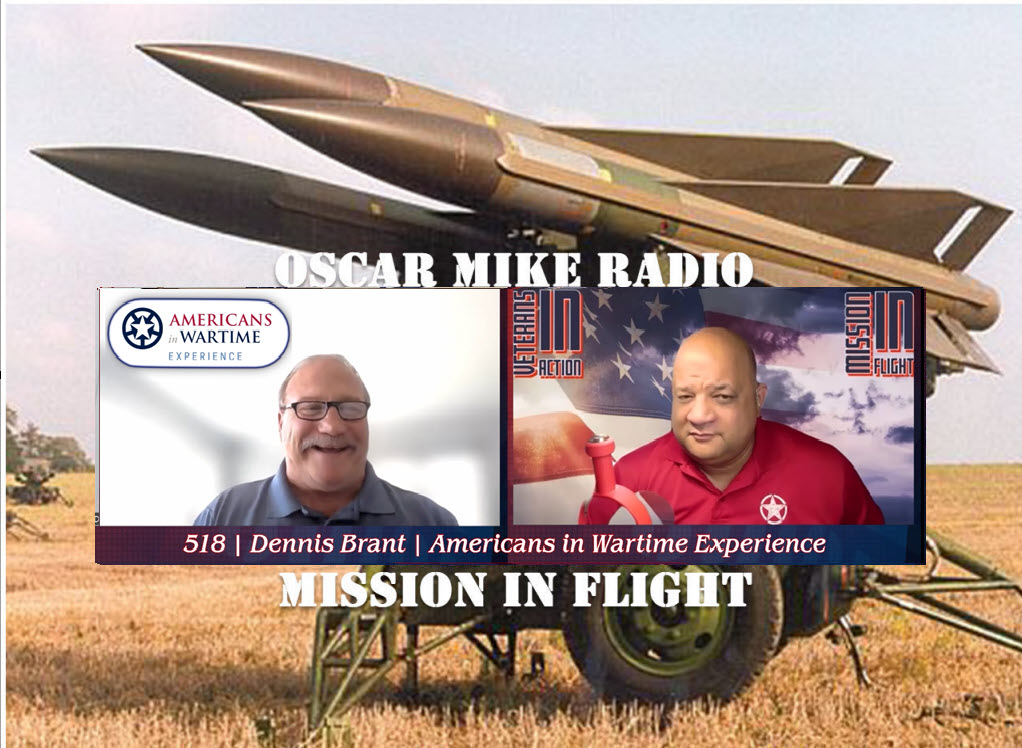

Dennis Brandt and Americans in Wartime Experience: Bringing Military History to Life
What if you could climb aboard a working military tank and experience history firsthand?
Imagine hearing the engine, feeling the vibration of the vehicle, and discovering what it took for the men and women who served during wartime to accomplish their missions.
In this episode of Oscar Mike Radio, I spoke with Dennis Brandt of Americans in Wartime Experience, an organization dedicated to preserving military history, restoring historic vehicles, and sharing the firsthand experiences of America’s veterans.
Our conversation covered everything from a nearly forgotten World War I-era tank to an extraordinary collection of military vehicles from around the world.
But what interested me most was the organization’s commitment to preserving the voices of veterans before their stories are lost.
Americans in Wartime Experience: History You Can Experience
Military history is often presented through photographs, books, and museum exhibits.
Those resources are important, but Dennis explained how Americans in Wartime Experience is working to create something more immersive.
The organization’s vision includes giving visitors opportunities to experience military history through restored vehicles, interactive displays, and outdoor environments.
Instead of simply looking at a tank behind a barrier, imagine being able to see and hear one operate.
That kind of experience can help people develop a greater appreciation for the equipment, conditions, and challenges associated with military service.
For younger generations, it can also create a connection to history that goes beyond reading about dates and battles.
Restoring a 1917 Tank Found in an Alabama Barn
One of the stories Dennis shared involved a remarkable restoration project.
A tank dating to 1917 had been sitting in a barn in Alabama.
Rather than allowing this piece of military history to deteriorate, the team undertook the challenge of bringing it back to life.
Dennis described the painstaking process of rebuilding the vehicle bolt by bolt.
Think about what that requires.
A vehicle more than a century old presents challenges that modern mechanics rarely encounter.
Replacement parts may not be readily available. Original engineering documents can be difficult to locate. And restoring historical equipment requires understanding how it was originally designed and operated.
The project represents more than mechanical restoration.
It’s about preserving a physical connection to an important period in military history.
When visitors see a restored vehicle operate, they gain a different perspective on the technology and people who served during that era.
Military Vehicles From Nearly 45 Countries
Another fascinating part of our conversation was the scope of the organization’s military vehicle collection.
Dennis discussed vehicles representing nearly 45 countries, providing an opportunity to explore military technology and equipment from different nations and conflicts.
Military vehicles tell stories about the challenges armed forces faced and the solutions engineers developed.
Their designs reflect different environments, military strategies, available resources, and technological capabilities.
But I also appreciate the human stories connected to these machines.
Every vehicle had people responsible for operating, maintaining, transporting, and repairing it.
As a Marine Corps veteran, I understand that military equipment is only part of the story.
The people behind that equipment are what make the history meaningful.
Living Landscapes of War: A Different Kind of Military Museum
Dennis also shared the organization’s vision for outdoor exhibits called “living landscapes of war.”
The concept is to create environments that help visitors better understand the settings in which military personnel operated.
Rather than viewing vehicles as isolated objects, visitors would experience them within historical landscapes designed to provide context.
The goal is to make military history more engaging and understandable.
It’s one thing to see a vehicle displayed in a museum.
It’s another to begin understanding the terrain, conditions, and environment associated with its use.
These planned exhibits represent an ambitious approach to military history education.
They also create opportunities for families, students, veterans, and military enthusiasts to connect with the past in meaningful ways.
Preserving Nearly 1,000 Veteran Interviews
As impressive as the military vehicles are, another part of the Americans in Wartime Experience mission stood out to me.
Dennis discussed an oral history project approaching 1,000 veteran interviews.
Those interviews preserve firsthand accounts from people who experienced military service across different generations and conflicts.
The collection includes stories from Medal of Honor recipients and veterans whose experiences may not be widely known.
One account Dennis shared involved a Vietnam-era soldier who survived for three days while hidden beneath bamboo.
Stories like that remind us that military history isn’t just about equipment, tactics, or the outcome of a battle.
It’s about human beings facing extraordinary circumstances.
And sometimes the most important details are the ones that never make it into a history textbook.
Why Veterans’ Firsthand Accounts Matter
One of the reasons I started Oscar Mike Radio was to create opportunities for veterans to share their experiences.
Every veteran has a story.
Some served in combat.
Others supported operations, maintained equipment, provided medical care, or performed missions that rarely receive public attention.
All those experiences contribute to our understanding of military service.
When a veteran shares a firsthand account, we gain something that cannot always be captured through official records.
We hear what they remember.
We learn what mattered to them.
And we begin to understand how their experiences shaped the rest of their lives.
That’s why the oral history work being done by Americans in Wartime Experience is so important.
As generations of veterans grow older, opportunities to record their experiences become increasingly valuable.
Once a story is lost, we may never have another opportunity to hear it.
Connecting Future Generations With Military History
What I appreciate about Americans in Wartime Experience is the way the organization brings together two important forms of preservation.
The first is physical history.
Restoring tanks and military vehicles allows future generations to see the equipment that played a role in military operations.
The second is personal history.
Recording veterans’ stories preserves the experiences, emotions, and perspectives of the people who served.
Together, these approaches create a more complete understanding of military history.
A restored tank can show us what soldiers operated.
A veteran’s story can help us understand what it meant to be there.
Both deserve to be preserved.
Keeping Veterans’ Stories Alive
My conversation with Dennis reinforced something I believe strongly.
Preserving military history isn’t just about remembering the past.
It’s about making sure future generations understand the people, sacrifices, and experiences behind that history.
Americans in Wartime Experience is working to accomplish that mission through vehicle restoration, immersive historical exhibits, and veteran oral histories.
Dennis, thank you for joining me on Oscar Mike Radio and sharing the vision behind Americans in Wartime Experience.
Thank you to everyone involved in restoring these historic vehicles and recording the stories of the men and women who served.
Your work helps ensure that military history remains more than something we read about.
It becomes something we can experience, understand, and remember.
Preserve the machines. Record the stories. Honor the people.
We are Mission in Flight!
Podcast: Play in new window | Download